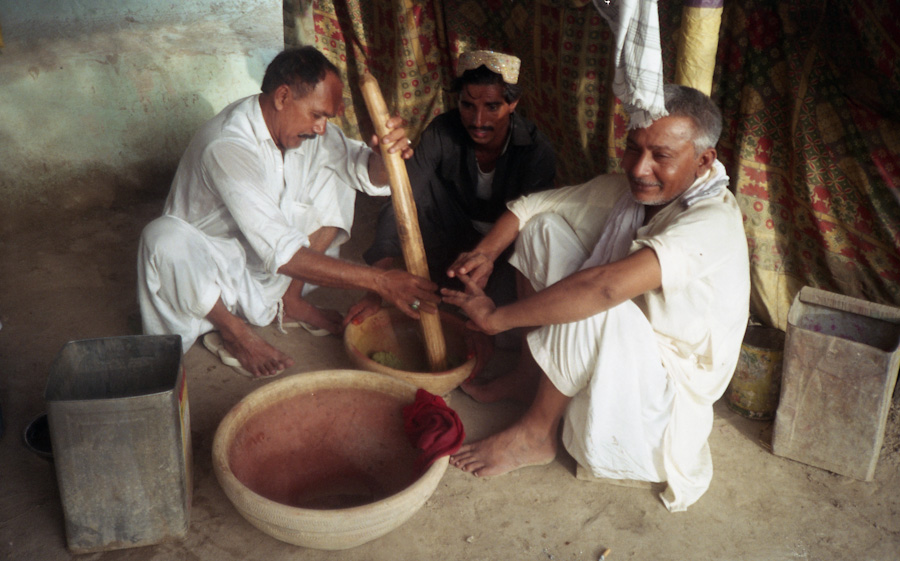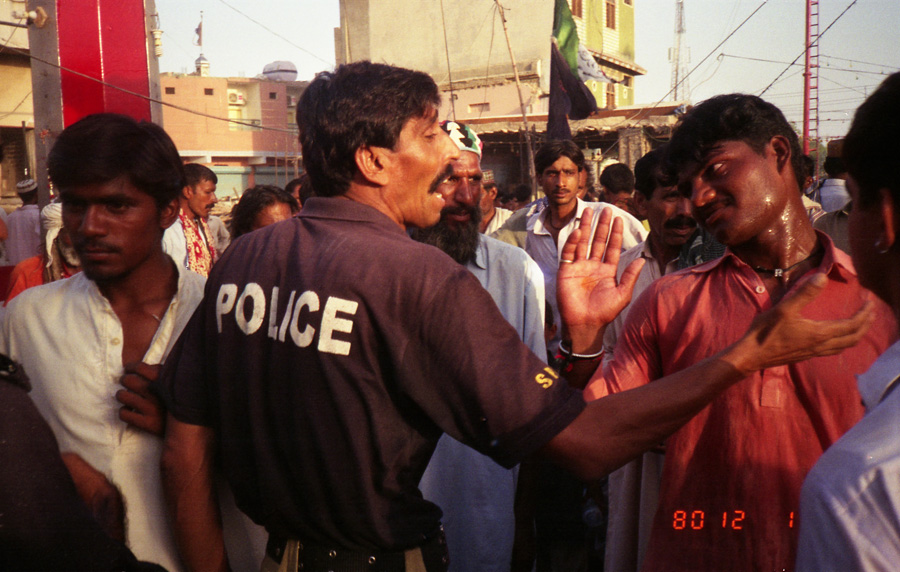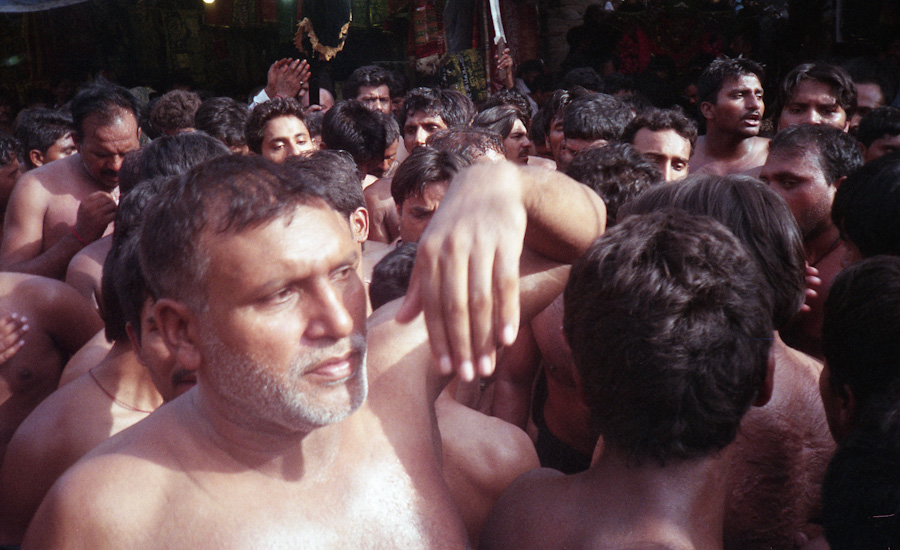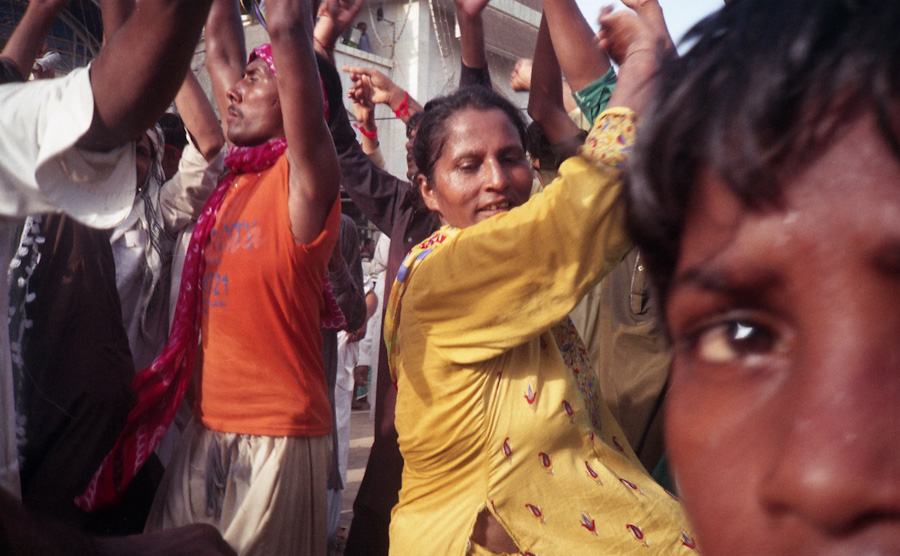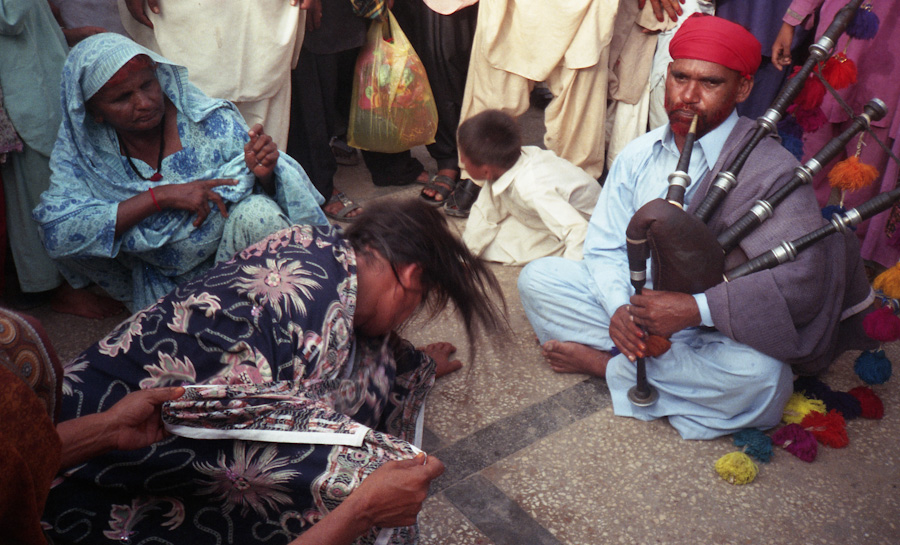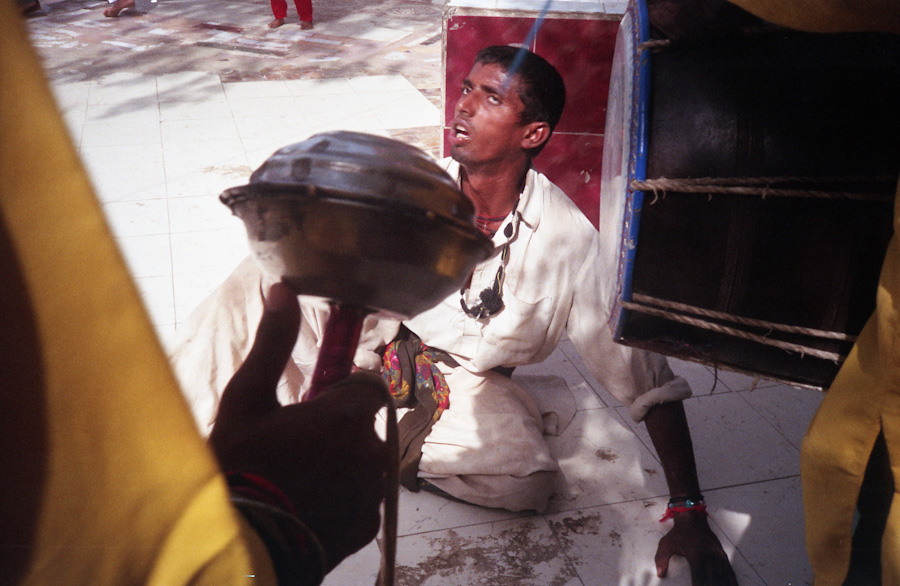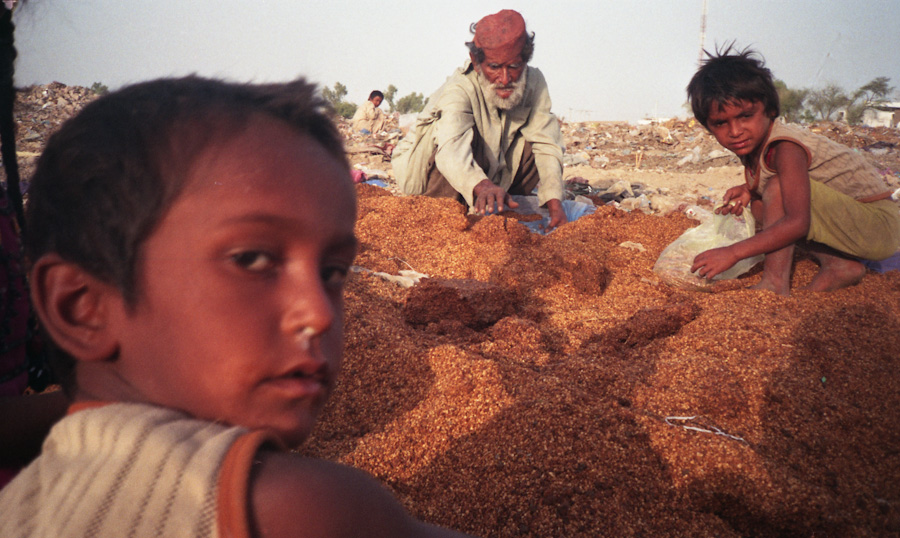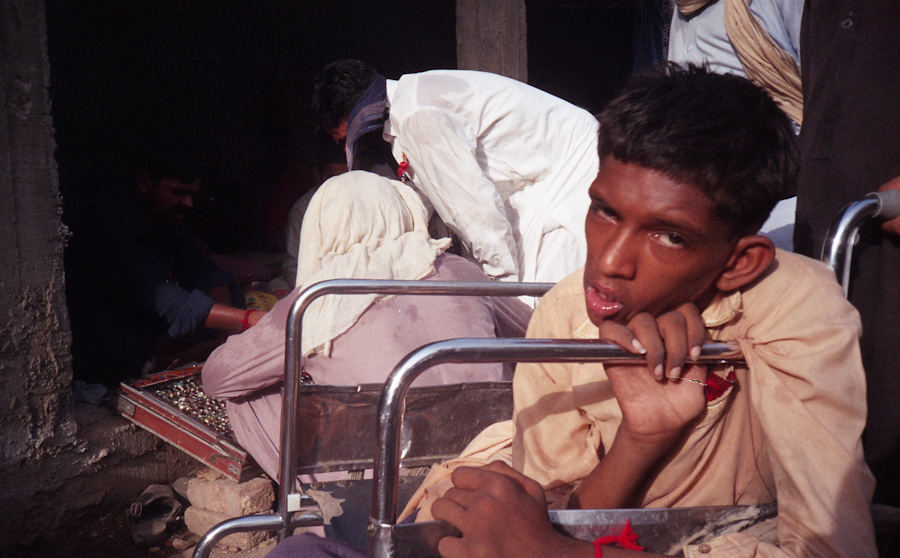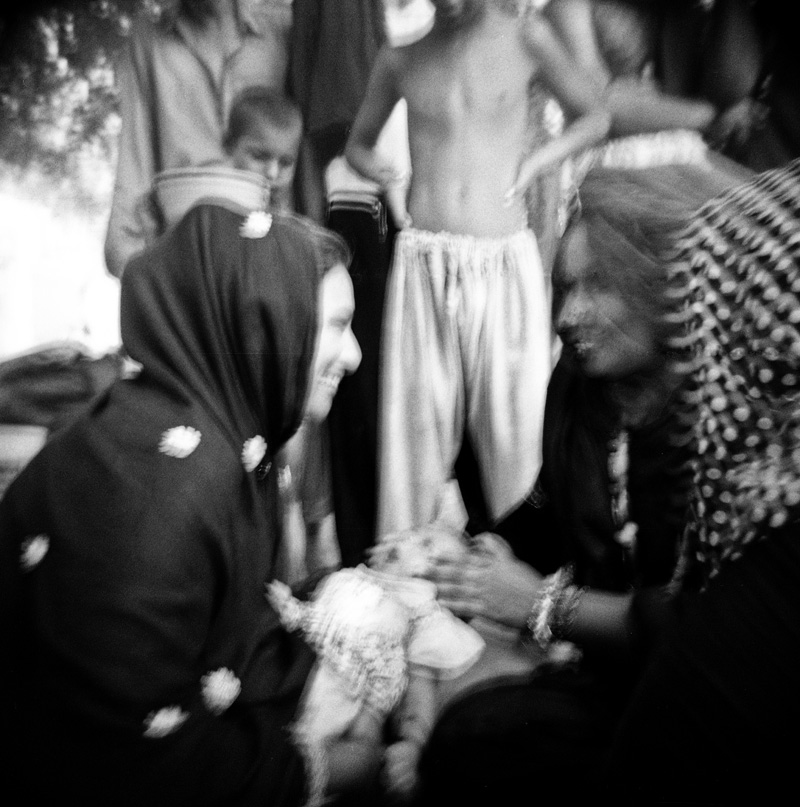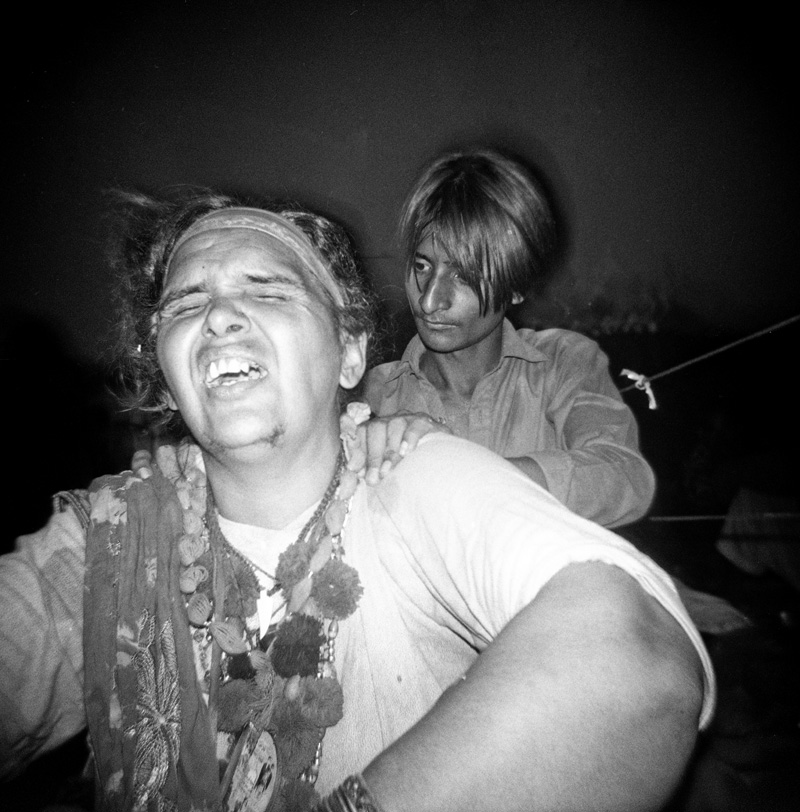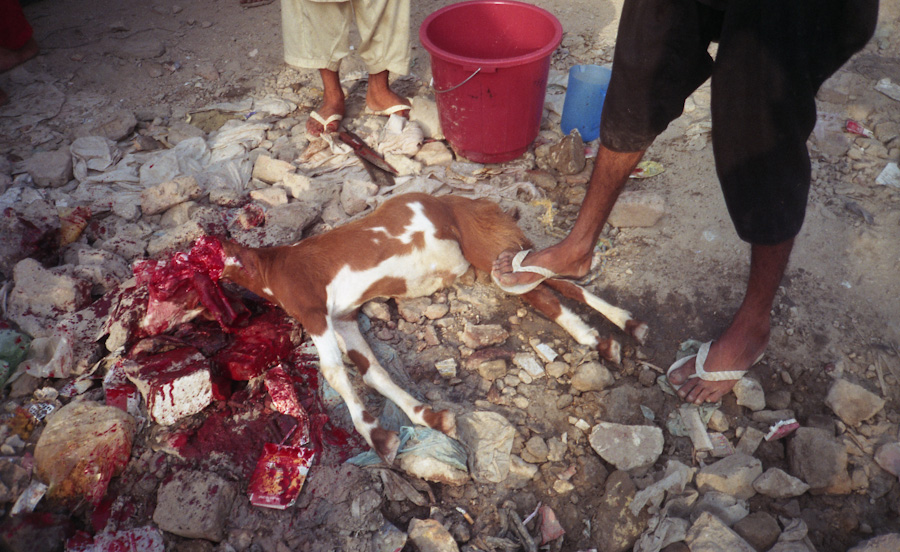
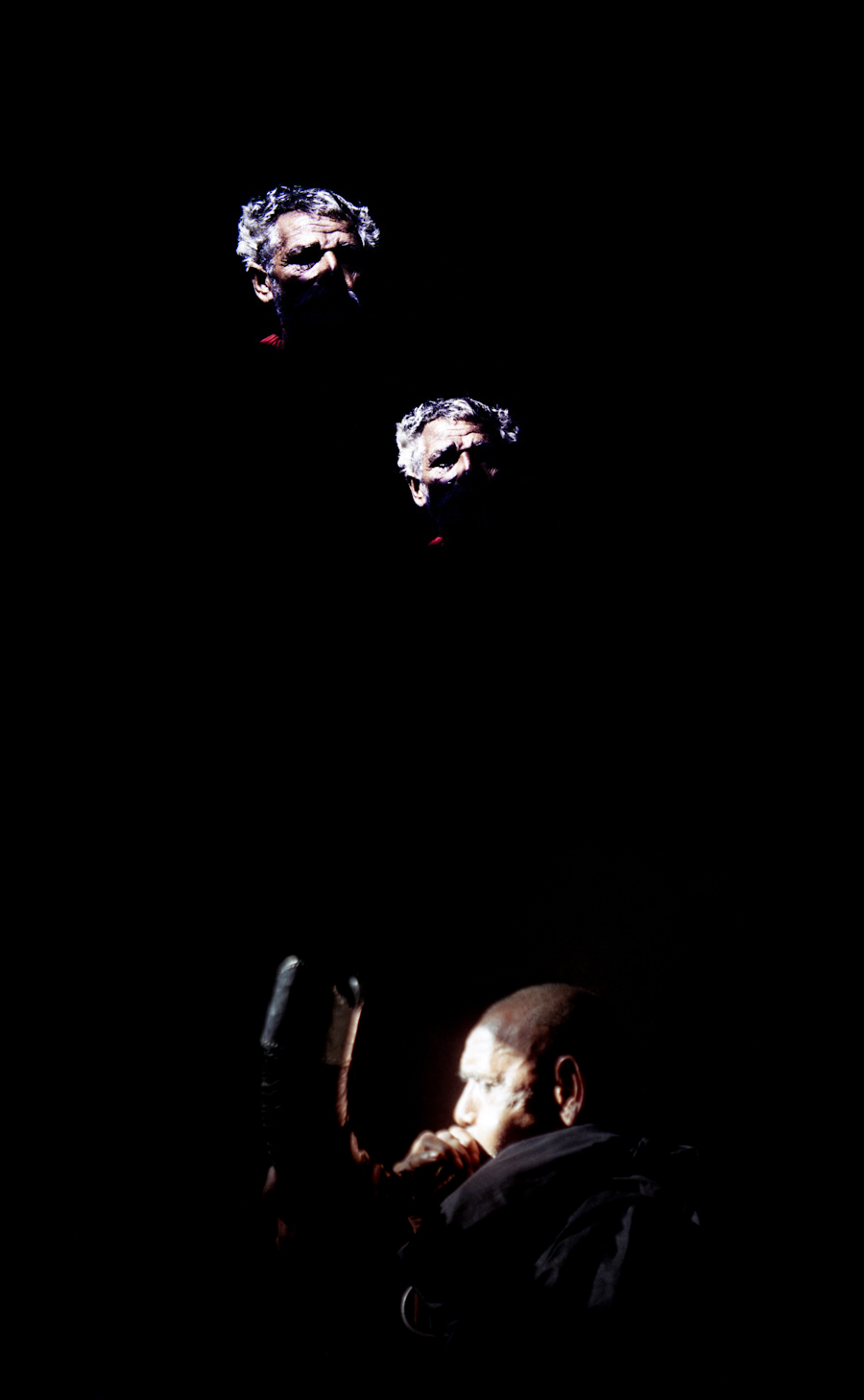
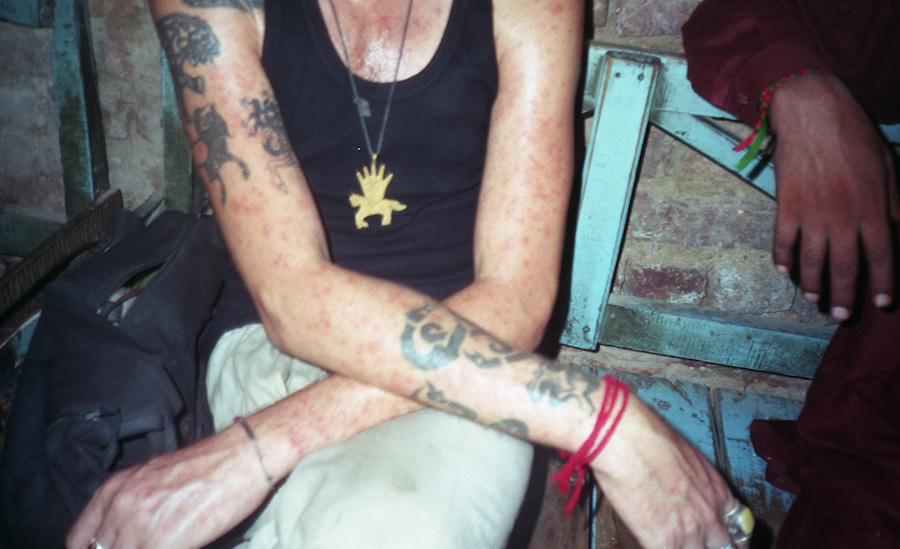
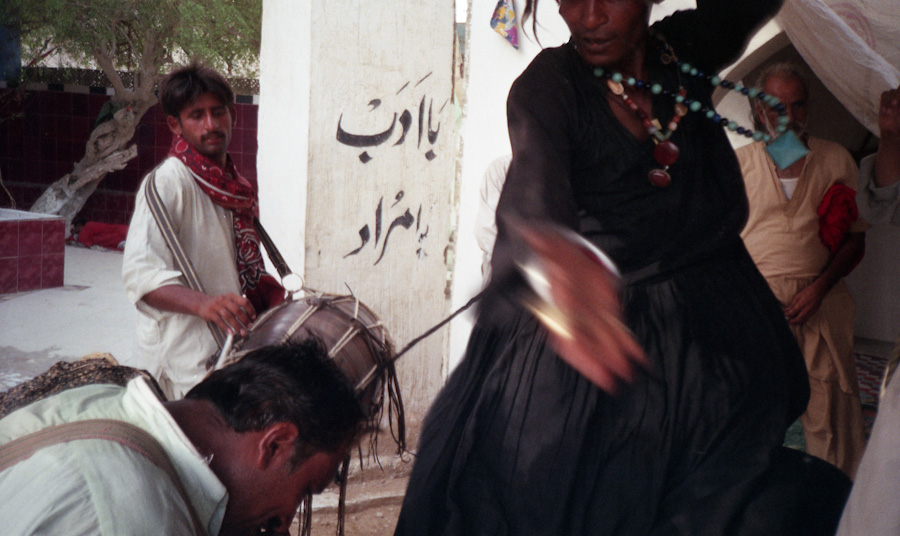
When I came to Sehwan, I quicky realized that my hairstyle is going to give me, by peculiar coincidence*, a certain kind of advantage in blending in. Travelling in Muslim world and absorbing the culture as we always do, I started to be called Kurdish by locals in Albania or Pakistani in Africa, but in this case it was a bit different. In Sehwan many people started pointing at my head and asking – Bodla? Bodla Bahar? I quickly ended in the camps of real Bodla followers. These radical ganja smoking fakirs are disciples of Bodla Bahar, who in turn was the most beloved disciple of Lal Shahbaz Qalandar, ages ago. They show their affiliation and disregard for the ordinary world rules by shaving their head, including eyebrows, and leaving just a band of hair growing from the upper side of head, sometimes fashioned into dreadlocks. Of course they knew I am not inititated into Qalandar tradition, I was also wearing my weird combination of salwar and exposing tattooed arms, sweating in the extreme heat, but nevertheless they were amused and the vibe was good, I was welcome. Drinking their bhang and occasionally shooting with cheap point and shoot 35 mm camera that I could develop in local lab and give prints away, that felt miles away from my previous incarnation as DSLR invader. I loved that and I got addicted, not to the bhang of course. That happened long before.
***
Kiedy przyjechałem do Sehwan, szybko zdałem sobie sprawę, że moja fryzura daje mi, dziwnym zbiegiem okoliczności*, pewną przewagę we wtapianiu się w tłum. Podróżuję od dłuższego czasu po muzułmańskim świecie, i jak zwykle to bywa, nasiakam lokalną, nazwijmy to, stylistyką, w Albanii pytali mnie czy jestem z Kurdystanu, w Afryce podejrzewano o pakistańskie korzenie, tym razem jednak chodziło o coś innego, o przynależność do wspólnoty outsiderów. W Sehwan wielu pielgrzymów pokazywało sobie moją głowę i pytało – Bodla? Bodla Bahar? Szybko trafiłem do obozowisk prawdziwych uczniów Bodli. Ci radykalni , zanurzeni w konopnym dymie fakirzy są wielbicielami Bodli Bahara, który z kolei był ukochanym uczniem Czerwonego Sokoła, wieki temu. Pokazują swoją przynależność, jak i olewkę reguł zwyczajnego świata, poprzez golenie głowy, włącznie z brwiami, pozostawiając jedynie kępę włosów wyrastająch ze szczytu głowy, lekko z boku, czasem splatanych w dredy. Oczywiście wiedzieli, że nie jestem inicjowany w tajemnice kalandarów, poza tym widać było też cudzoziemca w dziwnej kombinacji salwaru i odkrytych, wytatuowanych ramion, potwornie spoconych w ekstremalnym upale. Mimo to dobrze się bawili i śmiali z mej kitki, była dobra wibracja i czułem się mile widziany. Pijąc ich bhang i czasem strzelając foteczkę tanią małpką na film, który mogłem wywołać w tutejszym labie i rozdać odbitki, czułem się tak inaczej niż w poprzednim wcieleniu, najeźdzcy uzbrojonego w lustrzankę. Kochałem to i chyba się uzależniłem, nie od bhangu oczywiście. To stało się dużo wczesniej.
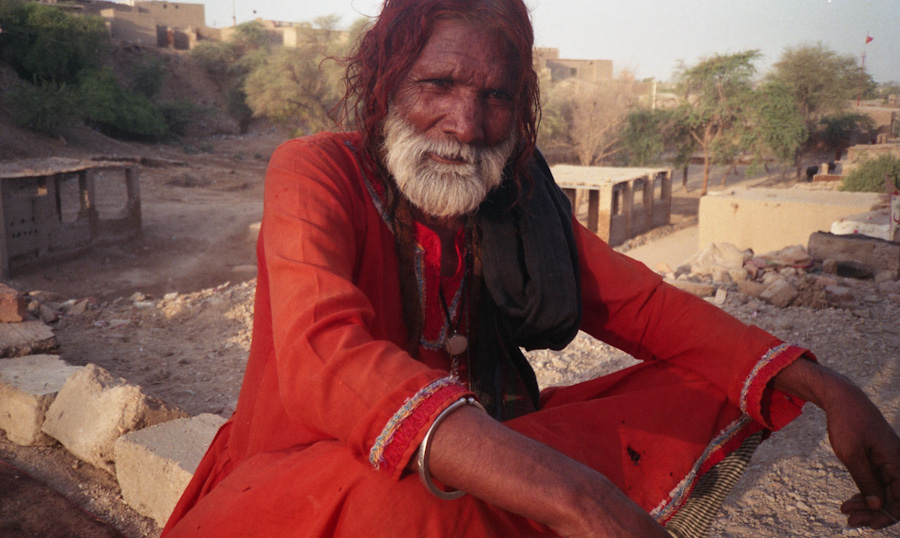
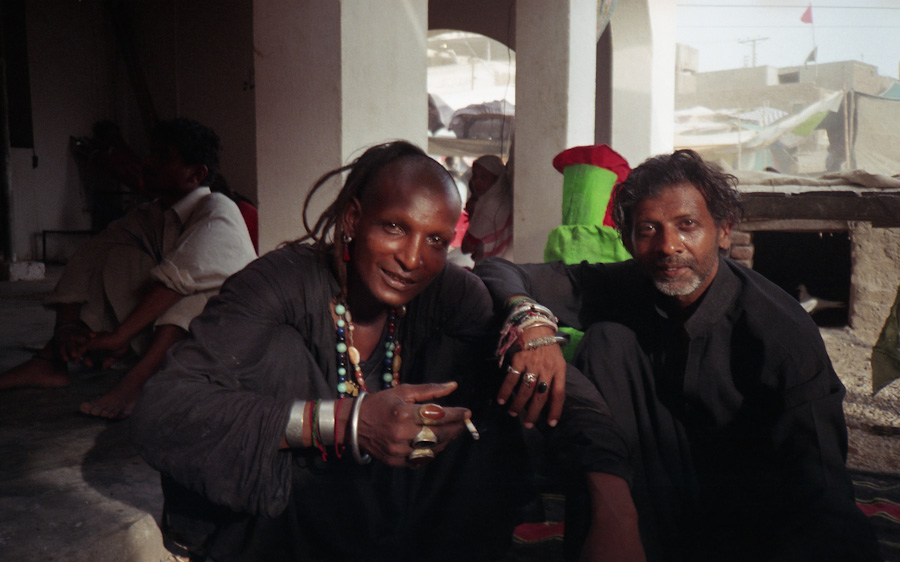
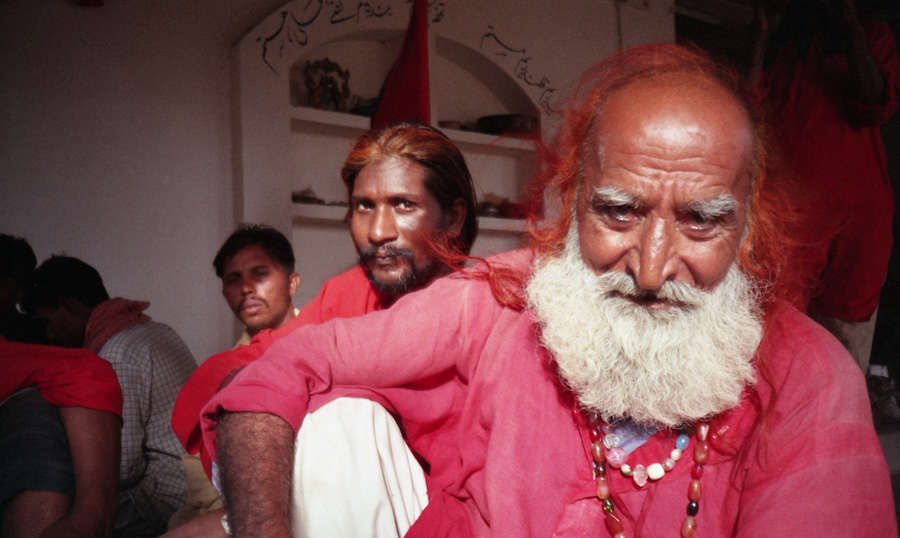
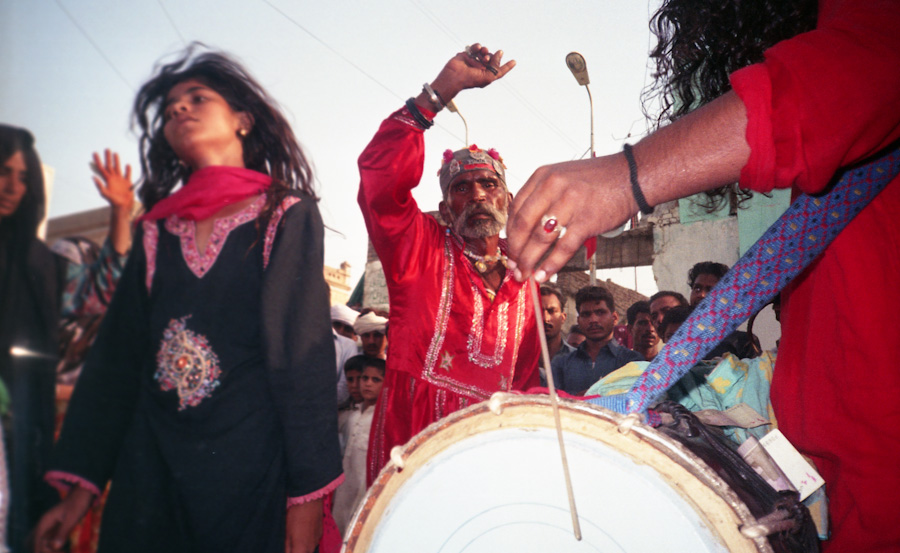
The fakirs of Bodla have their separate shrine, at the grave of their master, and their way of doing dhamal. I could call it a crazy mayhem to the beat of loud drums , or, in words of Rune Selsing, “a few simple dance steps (first the right foot is placed to the front, then the left one, wherefrom the dancers raise both arms) alternate with spinning around to the right. As a form of dhikr characterised by circular movements, it is reminiscent of the well-known Persian mystical motif of moths fluttering around the flame. ”
It could remind you of the Mevlevi whirling dervishes, yeah, probably, it is something like their naughty brothers who broke free into wilderness, fellows of Shams Tabrizi rather than Mevlana Rumi. While the Mevlevi appeal to sophisticated city living connoisseur of poetry and beauty, the fakirs of Bodla who on each new moon parade into the main shrine of Red Falcon stir the wild parts of the soul that pisses against the wall of Babylon rather then patiently work inside it. They are not guided by cultured scholars but rather by great vagabonds of the past, who dissolved boundaries and went into wild lands. When they blow their horns, when they invoke Ali as chillum is lit, a force descends that is to be reckoned with. To quote some of dervishes interviewed by Rune Selsing : ‘When I do dhamāl, I feel that my murshid Bodla Bahar places his right hand on my shoulder, sometimes he then even embraces me. (…) while dancing you are “charged” by the saint’s energy, he takes over your body”
***
Fakirzy Bodli mają swoje oddzielne sanktuarium, przy grobie ich mistrza, i mają swój własny sposób tańczenia dhamal. Mógłbym nazwać go dionizyjskim szaleństwem, mogę też zacytować słowa Rune Selsinga, to “kilka prostych kroków ( najpierw prawa stopa ląduje z przodu, potem lewa, nastepnie tancerze podnoszą oba ramiona ), przemieszanych z wirowaniem w prawą stronę. Jako forma zikru charakteryzująca się kolistymi ruchami przypomina znany z perskiego mistycyzmu motyw ciem wirujących wokół płomienia”
Mogłoby to przywołać też najbardziej znanych wirujących derwiszy Mewlewi, tak, prawdopodobnie, możnaby tu mówić o ich niegrzecznych bratach którzy uciekli z domu w dzikie stepy, kumpli raczej Shamsa z Tabrizu niż Mewlany Rumiego. Podczas gdy Mewlewi z pewnością spodobają się dzieciom new age z Manhattanu, miejskim koneserom poezji i piękna, fakirzy Bodli, idąc z każdym nowiem księżyca w szalonej paradzie do grobu Sokoła poruszają dziką stronę duszy, która szcza pod murem Babilonu zamiast cierpliwie pracować nad jego zmianą od środka. Ich nauczycielami nie są kulturalni myśliciele, szanowani członkowie establishmentu ale raczej wielcy włóczędzy czasów bez paszportów, którzy rozpuszczali granice i wyruszali w dzikie krainy. Kiedy dmą w swe rogi, kiedy przeciagające się okrzyki wzywają Alego podczas zapalania chillum, spływa potężna siła, z którą lepiej się liczyć. Cytując derwiszy – rozmówców Rune Selsinga – ” Kiedy robię dhamal, czuję jak mój murszid Bodla Bahar kładzie swą prawą dłoń na mym ramieniu, czasem nawet obejmuje mnie. (…) kiedy tańczysz, jesteś ładowany energią świętego, przejmuje on twoje ciało”
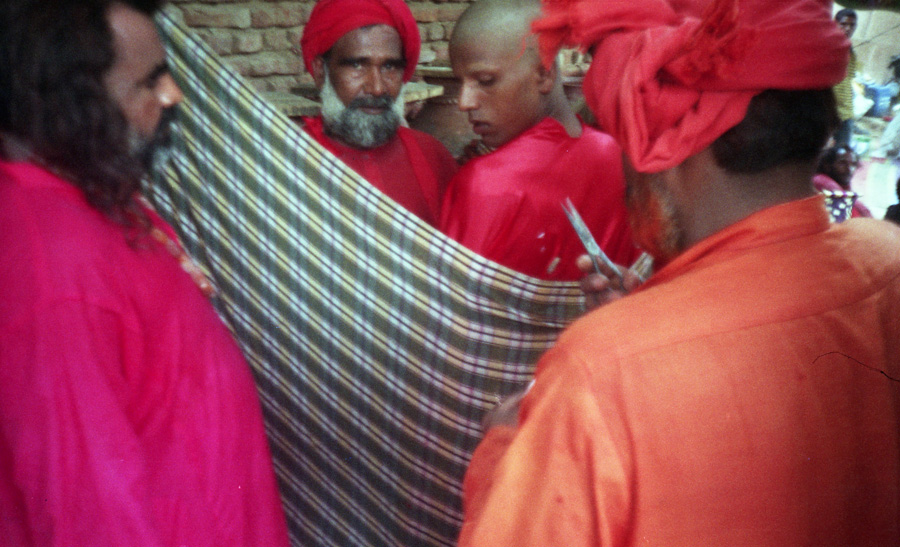
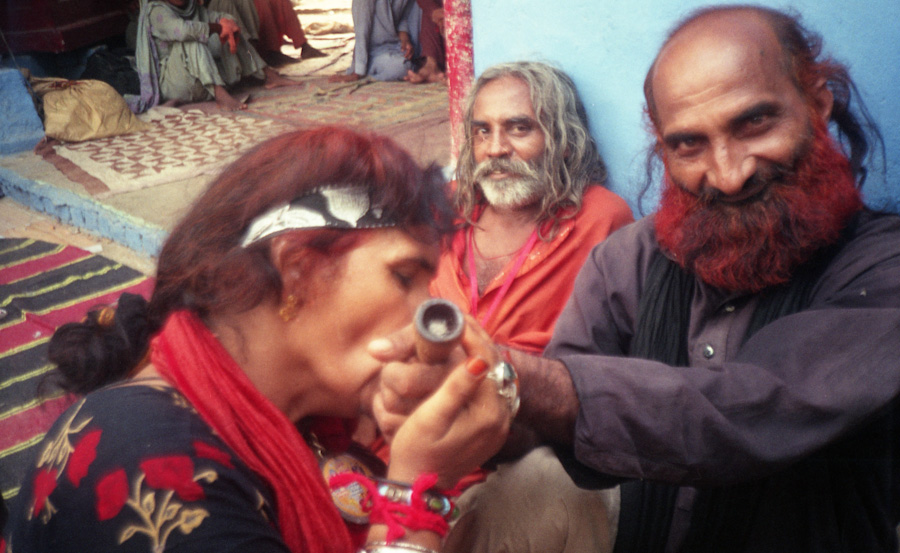
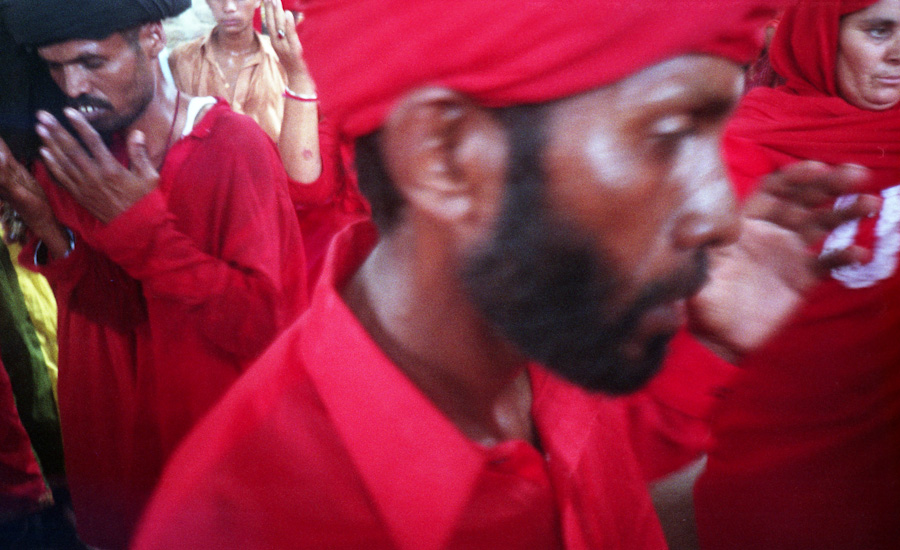
*Perhaps there is more to it then coincidence, I come to realize, after seeing more and more of the common thread uniting cultures, across borders of time and space. Our Eastern European way of shaving head by Cossacks and some of Polish gentry , according to Ali, my friend from Istanbul with great knowledge of Ottoman history, came from Turkish scary riders called deli, the mad ones, apart from their weird mohawks adorned with amulets, furs, bird feathers and other items of shamanic origin. Whether there is link between mad cavalry and mad dervishes, I choose to believe so.
*Być może to więcej niż zbieg okoliczności, tak mi się wydaję, kiedy dostrzegam coraz więcej wspólnych nici łączących pozornie odległe kultury, ponad granicami czasu i przestrzeni. Nasza stara wschodnioeuropejska maniera golenia głowy przez kozaków czy też część polskiej szlachty, według Alego, mojego znajomka z Istambułu, z wielką wiedzą o otomańskiej tradycji, pochodzi od przerażającej tureckiej jazdy zwanej deli, szaleni, którzy poza dziwacznymi irokezami ustrojeni byli w amulety, futra, ptasie pióra i inne przedmioty o szamańskich korzeniach z Azji Środkowej. Czy z szaloną turecką kawalerią mają też coś wspólnego szaleni derwisze, przemierzający kiedyś cały Bliski Wschód, tak, decyduję się w to wierzyć.
Photos from gathering in Sehwan Sharif, Pakistan belong to long term project about Sufism and mystical traditions in Muslim world / Zdjęcia ze zgromadzenia w Sehwan Sharif w Pakistanie należą do długoterminowego projektu o sufizmie i mistycznych tradycjach w muzułmańskim świecie.